Exclusive Interview: Meet the Creator Behind Icebreaker Series WLW
Icebreaker Series WLW creator Gen speaks exclusively to SoaplandTV about Ana and Noémie, AI production, LGBTQ+ storytelling, fan reaction and what comes next.
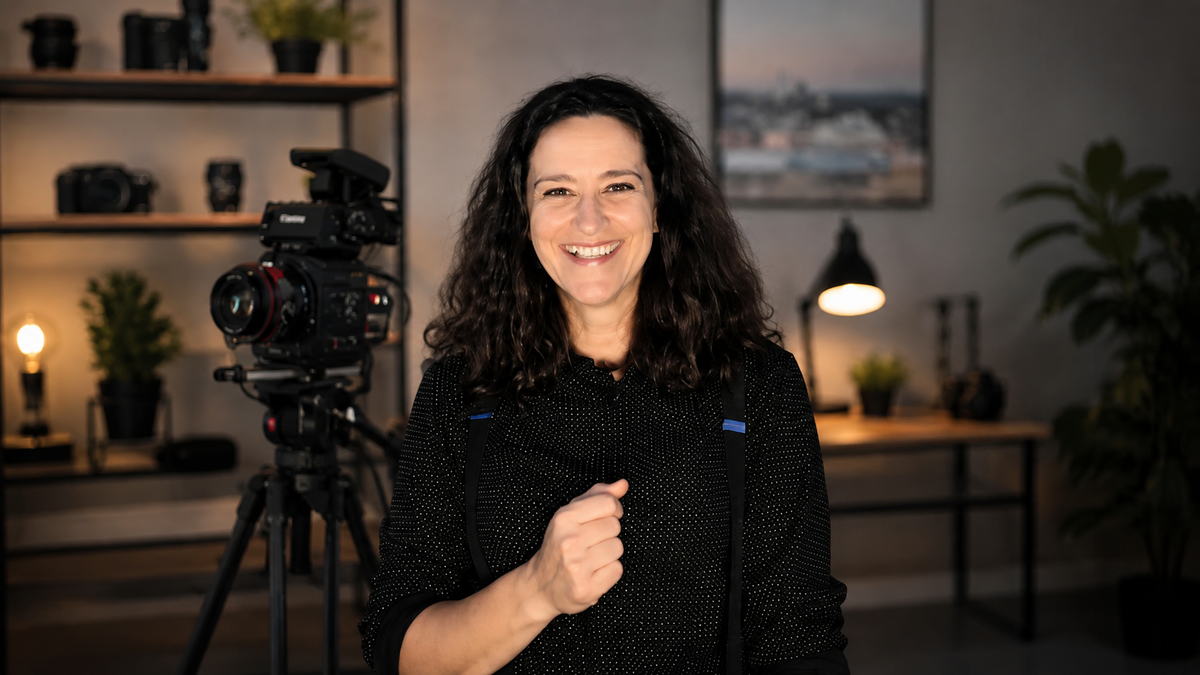
SoaplandTV is delighted to bring readers an exclusive interview with Gen, the creator of online AI- Icebreaker Series WLW. She talks Ana and Noémie, AI production, LGBTQ+ storytelling, fan reaction and what comes next for the series.
How would you describe Icebreaker and its central story to someone discovering it for the first time?
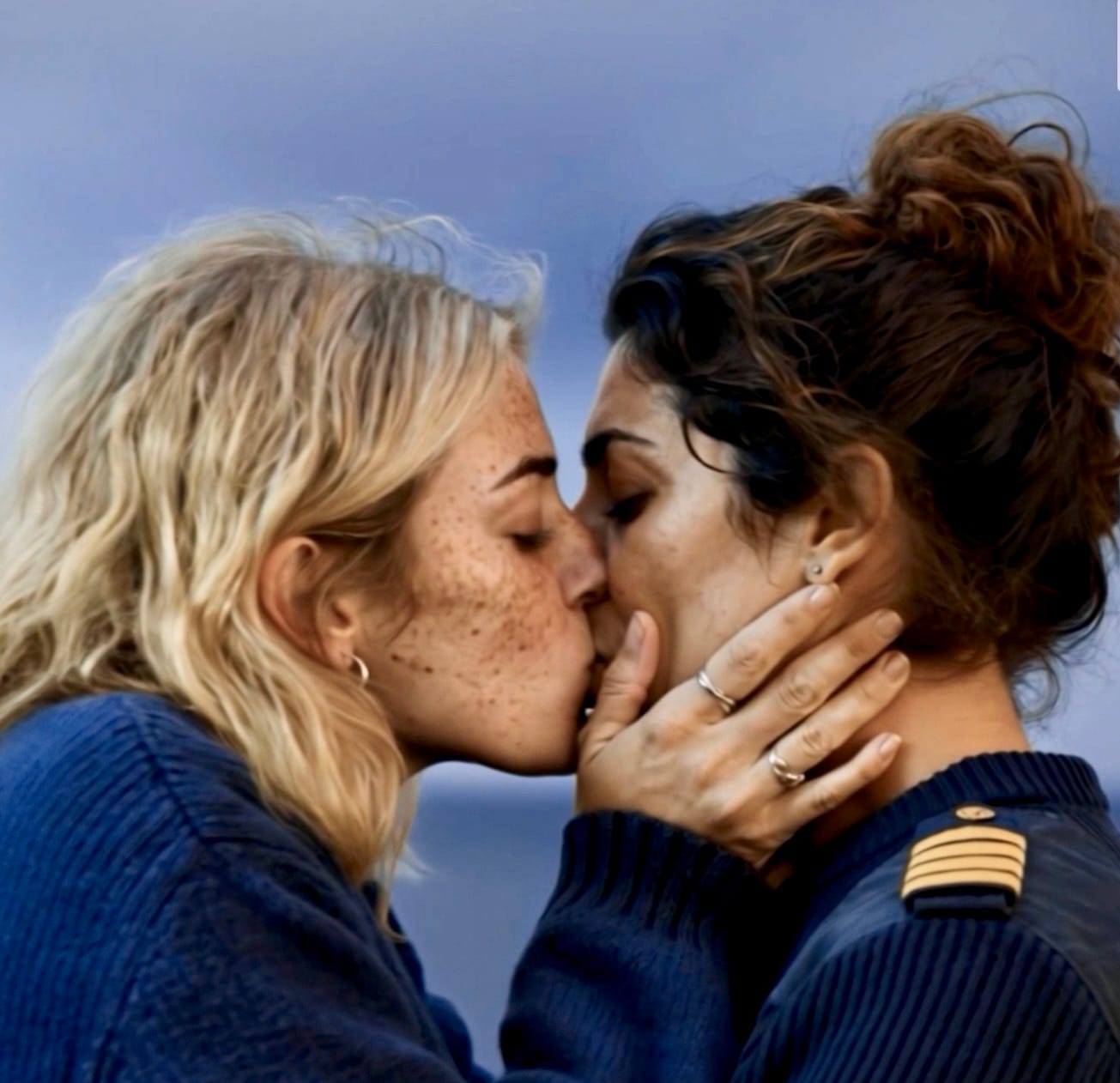
Icebreaker is really the story of two people who probably would never have taken the time to truly get to know each other under normal circumstances. Ana is the captain of the Polaris, a research vessel on an Arctic expedition. She is very disciplined, reserved, and extremely strict when it comes to rules and protocols. Noémie is a videographer hired by the company to document the expedition, and she comes into that world with a very different personality and way of seeing things
They are almost complete opposites, but because they are living and working together on a ship for such a long period of time, they can’t simply walk away from each other. That forced proximity gives them the time to move beyond their first impressions and gradually discover who the other person really is.
The romance grows out of that. In the outside world, they might have crossed paths and simply kept going. On the Polaris, they have the time to really get to know each other, and eventually they discover that the differences that initially separated them are also part of what makes them complement each other.
Where did the idea come from, and what inspired you to turn it into a series?
What really inspired me was seeing more and more short-form series emerging on social media and dedicated short-series platforms. I became fascinated by the format, but I also noticed that many of the romantic stories I was seeing relied heavily on coercion, manipulation or unhealthy power dynamics.
That wasn’t the kind of love story between women that I wanted to tell. I wanted to explore a relationship where the tension comes from two very different people learning to understand each other, rather than from one person controlling or manipulating the other.
So in many ways, Icebreaker came from wanting to create the kind of story I wanted to see myself. The Arctic setting and the isolation of the Polaris gave me the perfect environment for that, because Ana and Noémie have to spend time together, confront their differences and slowly build something based on trust. That’s really where the series began.
Can you tell us about your own creative background?
I’ve been working in video production for 24 years, so my creative background has always been very visual. I’ve worked extensively in the music industry, in television advertising, and on storytelling projects built around music and albums. Over the years I’ve done everything from shooting and editing to sound design, and I’ve also worked as a post-production coordinator on television series and films.
What I hadn’t done before Icebreaker was write a series. Writing was new territory for me. I did write a lot of poetry when I was a teenager, though, and I’ve always had a very active imagination.
And I suppose I’ve spent a good part of my life daydreaming about love! So perhaps a romance was always going to be the first story I eventually sat down and wrote.
How did you develop the main characters, their personalities and relationships?
A lot of the way I write Ana and Noémie comes from my own emotional experience. I can recognise parts of myself in both of them. At different moments in my life, and with different people, I’ve been much more like Noémie, open, expressive and willing to move towards someone. At other times, I’ve been much more like Ana, guarded, controlled and reluctant to show what I’m feeling.
So when I’m shaping their relationship, I draw quite a lot from those different sides of myself and from reactions or emotions that feel familiar to me. I’m also very interested in the particular kind of emotional closeness that can exist between two women. There can be so much communicated through small gestures, silence, attention and the things that aren’t said directly. That’s something I really enjoy exploring with Ana and Noémie.
I try to let their relationship grow through those smaller moments rather than forcing it forward simply because the story needs a romantic beat. For me, the relationship works best when their reactions feel true to who they are, even when that means one of them takes a step forward and the other immediately puts her walls back up.
Did you expect viewers to form such a strong emotional connection with them? What has that response been like?
Honestly, no. I hoped people would enjoy the story, but I didn’t expect them to become this emotionally invested in Ana and Noémie.
The response has been much stronger and more personal than I ever imagined. People don’t just comment on what happens in an episode. They analyse the smallest looks, silences and reactions between the characters, and they become genuinely excited, frustrated or emotional depending on what Ana and Noémie are going through.
What surprised me most is how real the characters seem to have become for the audience. People talk about them almost as if they know them, and seeing that level of attachment develop so quickly has been incredible.
Are there any fan reactions or messages that have particularly stayed with you?
As the series has grown, the messages I’ve received have become incredibly varied and sometimes very moving. There’s a woman in her seventies who regularly tells me that watching Ana and Noémie makes her feel like a teenager again. I’ve had people tell me that the series has made them reflect on their own relationships and grow emotionally. Some have even told me that it helped them reconnect with their partners and rediscover a level of intimacy that had been missing from their relationship.
I read messages from people telling me what the series means to them, what it makes them feel, what they recognise from their own lives, and sometimes even what it helps them understand about themselves. One woman told me she was a bus driver and that she had stopped for her break so she could watch the new episode. Little things like that completely blow my mind.
I could never have sat down at the beginning and decided that Icebreaker was going to have those effects on people. That’s something the audience has brought to the story themselves.
What does the creative process behind an episode look like, from the first idea to the finished video?
The initial story took several weeks to develop, but the first season wasn’t created in a very traditional way. It actually started as something I was writing purely for fun. At that point, I had no real intention of producing it.
Once the story was almost complete, I became curious about what Ana and Noémie would actually look like. I started developing the visual identity of the characters, and I became a little bit attached to them! That was when I started experimenting with AI to see whether I could actually bring this world to life. I had never done anything like that before.
I created the first episode, and then, somewhat impatiently, I jumped ahead and created the episode with the first kiss because I really wanted to see whether the chemistry I had imagined between them would translate visually. Then I went back to episode two.
Once I had the first three episodes, I thought, “Actually, this kind of works.” So I posted them on social media, and the response came surprisingly quickly. People wanted to see what happened next, so I kept producing.
The first season is actually still being made. I produce new episodes every week in time for their weekly release, so I’m not sitting on a completed season that was produced months in advance. The audience is essentially watching the series while I’m still creating it.
When I started, I was releasing around three minutes of Icebreaker each week. The episodes I’m producing now are closer to six minute.
At the moment, that can mean working 12 to 14 hours a day, six days a week, just to get the next episode finished. And on the remaining day, I’m usually answering comments and interacting with the audience.
I have the foundation of the story and I know where it’s going, but the production process has allowed me to keep refining the characters along the way. For me, characters on a page and characters on screen aren’t quite the same thing. Once Ana and Noémie became visual and started to feel almost real to me, I began to understand them differently. Their personalities became clearer, and that allowed me to develop them, and their relationship, with much more depth as the season progressed.
Which parts are created or directed by you, and where does AI enter the production process?
I create the story, write the characters and dialogue, and direct every scene, from the emotions and performances I want to the camera angles, locations, clothing and visual details.
AI enters the process as the tool that allows me to turn those decisions into images and video. Kling is the main platform I use for video generation, and then I take that material through the rest of the post-production process myself.
So AI is what makes Icebreaker physically possible for me to produce, but the story, characters and creative direction come from me.
What are the biggest challenges in keeping the characters, voices, locations and emotions consistent?
The biggest challenge is probably dealing with the unpredictability and limitations of AI. I can generate the same scene ten, twelve or fifteen times because I’m not getting exactly the emotion I want, or a character isn’t standing where I need them to be.
And sometimes you finally get the emotion right, the composition is right, everything seems perfect… and then, for some inexplicable reason, one of the characters isn’t wearing trousers! So you start again.
AI can create extraordinary things, but you don’t have the same level of control you would have when directing a human being. I can’t simply tell Ana, “That was great, but give me a little less emotion on this line and take one step to the left.” Sometimes getting that very specific result means generating and adjusting the scene over and over again.
So AI has made it possible for me to create a series that I could never have produced independently otherwise, but it certainly hasn’t made producing a series effortless.
Has the technology improved since you started, and has that changed what you can create?
Not really, simply because Icebreaker is still such a young project. I only started producing the series about a month and a half ago, so there hasn’t been enough time for the technology to change dramatically during the production.
But I’m definitely looking forward to seeing where it goes. Right now, there are still limitations that sometimes prevent me from translating exactly what I have in my head onto the screen. I can get close, but not always all the way there.
What excites me about the technology improving isn’t necessarily being able to create more, but having more creative freedom and more precise control. I already know what I want to show. I’m looking forward to the tools becoming capable of letting me bring more of that vision to the screen exactly as I imagine it.
What do people often misunderstand about the amount of human creativity, writing, direction and editing involved?
I can’t speak for every AI-generated project, because I’m sure there are productions where AI is responsible for much more of the creative process. But that isn’t how I make Icebreaker.
What appears on screen comes from very specific creative decisions I make. Every character, outfit, location, hesitation, look, action and camera shot is described and directed for that particular scene. I’m not asking AI to decide what happens in the episode or how the story should be told. I already know what I want the scene to be, and I use the technology to try to create it visually.
Even then, the first result is rarely the final one. I’ll generate a shot, evaluate the performance, framing and position of the characters, and decide whether it actually communicates what I intended. If it doesn’t, I adjust it and try again.
I also do the entire edit myself. I choose which takes make it into the episode, how long a look lasts, where a cut happens, when we stay on a character instead of cutting away, how the scenes flow together and ultimately how the episode feels.
So in my case, AI primarily generates the visual material. The creative decisions behind what that material should be are mine. And, of course, sometimes the AI actually listens to me!
How do you view concerns about originality, consent and the future of actors and writers?
I think those concerns are absolutely legitimate, and I do believe AI needs regulation. Consent, in particular, should be fundamental. Using the face, voice or identifiable characteristics of a real person without their permission is something I don’t believe should be acceptable. That principle mattered before AI, and I think it matters even more now because of what the technology is capable of doing.
When it comes to actors and writers, I personally don’t see AI storytelling as something that should replace them. I see it as a different form of creation.
We’ve seen new forms of technology enter the entertainment industry before. Animation didn’t make live-action storytelling disappear, and VFX didn’t eliminate the need for human creativity. They created different possibilities and different ways of telling stories. I think AI could ultimately occupy its own space in a similar way.
In my case, it allows me to create a series that I simply wouldn’t have the financial resources to produce traditionally. I’m not choosing AI instead of hiring a cast and crew for a production I could otherwise afford. Without this technology, Icebreaker wouldn’t become a traditionally produced television series. It simply wouldn’t exist on screen.
Of course, this technology is evolving incredibly quickly, so none of us really knows exactly what the industry will look like in the future. I think that’s precisely why conversations about consent, regulation and protecting human creators need to evolve just as quickly.
Do you see AI series as competition for traditional television, or as a new form of storytelling alongside it?
At this stage, I don’t see AI-created series as direct competition for traditional television. I see it as a new way for independent creators to bring stories to life that might otherwise never be produced.
That’s exactly what happened with Icebreaker. I had a story, but not the resources to produce it traditionally. AI gave me another way to express it.
If one day projects like this become strong enough to compete for audience attention with traditional television, that would be incredible. But for now, I see it more as opening a new door than replacing an existing one.
What opportunities could this technology create for independent storytellers without traditional television budgets?
It gives independent creators a way to tell stories that might otherwise never make it to screen. Icebreaker is a perfect example of that. I had the story and the production experience, but not the resources to create a series of this scale traditionally. AI made that possible.
LGBTQ+ viewers have formed a strong connection with Icebreaker. Was that representation central to your plans from the beginning?
Not consciously, because Icebreaker initially started as something I was creating purely for myself, for fun. But because I’m part of the LGBTQ+ community myself, a love story between two women was naturally what I had in mind when I created it.
I was making the kind of story I wanted to watch, and one I had spent years looking for: a beautiful relationship between women that didn’t inevitably end in tragedy, death or separation.
So representation wasn’t something I added afterwards or treated as a separate goal. It was simply part of the story from the beginning because it was part of what I personally wanted to see on screen.
What can you tell us about the future of Icebreaker?
I already have a second season in mind. Without giving too much away, there is still so much for Ana and Noémie to experience, both individually and together. Their relationship is still very new, and they have a lot to discover about each other and about themselves.
So for me, their story is far from over.
Is there anything exclusive about an upcoming storyline, character, episode or future plan that you are ready to share with SoaplandTV readers?
I can share one small exclusive: in the upcoming episode, the Polaris crew will make a stop on an island.
I won’t say too much about what happens there, but it will give us a chance to see the characters outside the usual rhythm of life on the ship and create a slightly different dynamic for the episode.
Finally, what would you like to say to everyone supporting Icebreaker?
I just want to say thank you. Thank you to everyone who watches, comments, shares, subscribes on YouTube even though the series is already free to watch, and follows Ana and Noémie with so much enthusiasm. The level of support honestly still overwhelms me.
I also want to thank everyone who has supported the series through Ko-fi. That support has given me more freedom to take creative risks, redo shots I might previously have kept, and push a little further with each episode. It has allowed me to be more demanding of myself and keep improving the series.
More than anything, thank you for loving these characters as much as I do and for following their story so faithfully. A lot of people tell me that each episode feels stronger than the last, and honestly, a big part of that is because the support from the audience gives me the freedom to keep pushing myself.
It means more to me than I know how to put into words.
Where to follow Icebreaker:
You can follow Icebreaker Series WLW on Instagram, TikTok, Facebook and YouTube to watch Ana and Noémie’s story, catch up on episodes and keep up with the latest releases from Gen.
SoaplandTV would like to thank Gen for taking the time to speak to us about Icebreaker Series WLW and for sharing this exclusive insight into the series.