Eve Unwin: The Power Of Second Chances

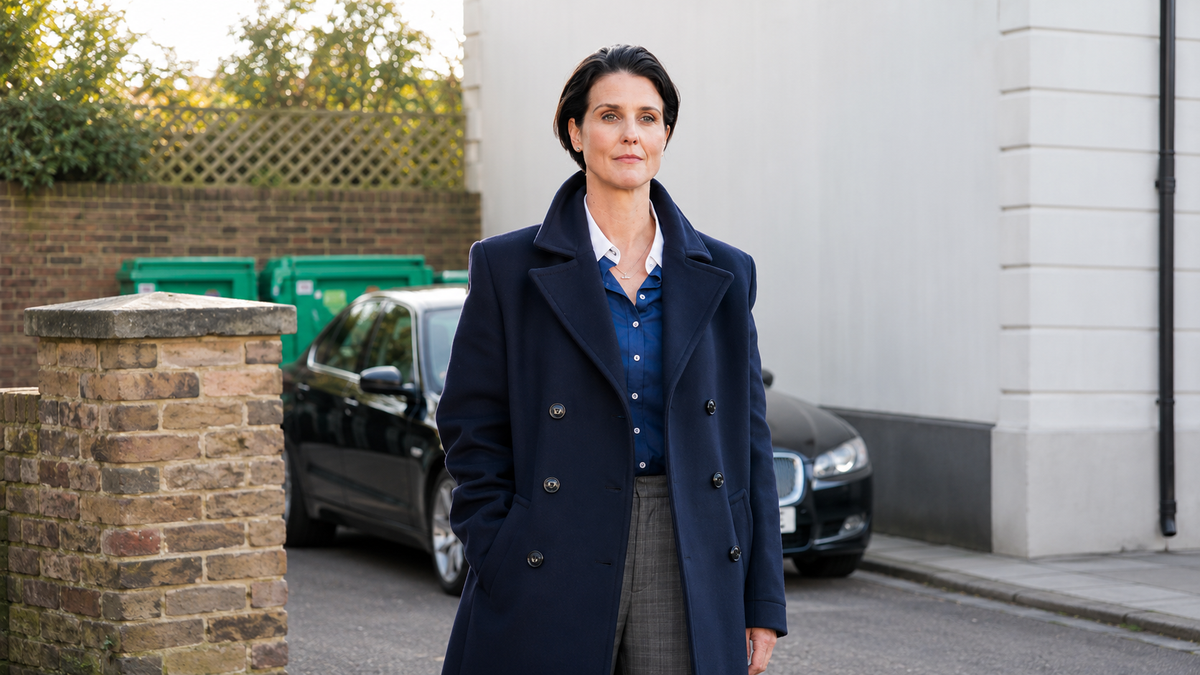
Eve Unwin has always been one of EastEnders’ most emotionally direct characters.
She arrived in Walford with a criminal record, a complicated history and a sharp tongue, but beneath the humour and swagger was a woman carrying deep wounds. Now, as Eve and Suki Panesar Unwin look towards adoption, EastEnders is bringing that past back into focus.
The adoption storyline is a powerful next chapter for Sukeve because it is not only about paperwork or family approval. It is about trust, healing and whether two women who have survived so much can build a future together. Eve and Suki are now married, they share the Panesar Unwin name, and they are no longer hiding what they mean to each other. But adoption asks a different question. It asks whether the past can be faced honestly enough to create something new.
For Eve, that question matters deeply.
Eve first appeared in EastEnders in 2021 as Stacey Slater’s wife. Their marriage was not a traditional romance, but a prison marriage built from loyalty, protection and friendship. Eve had met Stacey while serving time, and when she arrived in Walford after her release, she came with the kind of blunt confidence that made her stand out instantly.
She was funny, sharp, loyal to the Slaters and unafraid of confrontation. But her arrival also made it clear that Eve was not someone who had been given an easy path. Eve was born in Bradford, Yorkshire, and that part of her identity has always felt important to who she is. She is a straight talking Yorkshire woman through and through. Blunt when she needs to be, warm when it matters, fiercely loyal and never afraid to say what everyone else is avoiding.
That directness is part of her humour, but it is also part of her survival. Eve does not dress pain up. She says things as they are, because life has taught her there is no point pretending.
Before prison, she had been a solicitor. She had studied law, built a career and created a life that could have taken her in a very different direction. Then one violent incident changed everything.
Eve was sentenced to three years in prison after assaulting a man in 2018. The conviction cost her career, her solicitor’s licence and the version of life she had worked towards. It is a major part of her backstory, and now it has become relevant again as she and Suki face the adoption process.
In the latest adoption hurdle, Eve learns that her criminal record will need to be addressed properly. The important point is that it does not automatically rule her out. That gives the storyline hope rather than shutting the door. But she does need a reference from her family, which brings her mother Norma back into the picture.
That is where the story becomes more emotional. Eve’s relationship with her family has always been painful. Her past in Bradford is marked by loss, rejection and guilt. Her twin sister Erica died after being hit by a car driven by a drunk driver. Eve carried guilt over that death for years, even though she later came to understand that she did not cause the crash. Her parents blamed her, and that blame shaped much of her life.
Eve also faced homophobia from her family after coming out at nineteen. Her father’s reaction was cruel, and it is implied that other family members shared those views. Eve cut contact and built a life away from them, carrying the hurt of not being accepted by the people who should have loved her unconditionally.
That makes Norma’s return especially important. A family reference might sound like a practical adoption requirement, but for Eve it means reopening wounds she has spent years trying to live around. Asking Norma to speak for her is not just awkward. It forces Eve to face the mother who once failed to protect her emotionally, blamed her for grief that was never hers to carry, and did not give her the acceptance she needed as a young lesbian woman.
That is why this storyline fits Eve so well. Her criminal record is not being used simply as a scandal. It is being used to explore the person she became because of grief, rejection and survival. Eve made mistakes, and EastEnders should not erase that. But the show has also shown that her past does not define the whole of her.
Since arriving in Walford, Eve has become one of the Square’s most loyal and emotionally generous characters. She is rough around the edges, but she has a huge heart. She is a proper straight talking Yorkshire woman, sharp when she needs to be and deeply protective of the people she loves. She has stood by Stacey, protected the Slaters, supported people in crisis and repeatedly shown that she knows what it means to fight for someone.
That is exactly what made her connection with Suki so powerful.
Suki and Eve did not begin as an easy love story. Suki was guarded, controlled and trapped inside a life shaped by Nish Panesar, cultural pressure, family expectation and years of emotional abuse. Eve was direct, open and willing to challenge her. From the beginning, Eve saw through Suki’s armour. She saw the fear beneath the sharpness and the loneliness behind the control.
One of the reasons Sukeve works so well is that Eve never wanted to own Suki. That immediately separated her from the damaging men in Suki’s life. Nish controlled Suki and used marriage as a cage. Ranveer tried to use business power and sexual coercion against her. Ravi lied and manipulated the truth around Ranveer’s death. Again and again, men brought Suki fear, pressure, danger and control.
Eve brought something different.
She challenged Suki, but she did it with honesty. She pushed her, but not to dominate her. She wanted Suki to be truthful, not smaller. That difference is the emotional foundation of Sukeve. Eve did not rescue Suki by making her weak. She helped her become brave enough to be seen.
Their early dynamic was full of tension. They clashed, argued and circled each other, but Eve was never intimidated by Suki’s coldness. When Suki opened up about Nish’s abuse, Eve listened. When Suki was falling apart over the collapse of her family, Eve offered compassion without pretending Suki had done nothing wrong. When Suki was shaken after Ranveer’s attempted assault, Eve cared for her and reminded her that she was a victim.
Eve became the person Suki could be honest with, even when Suki was still too afraid to be honest with herself.
That is why the adoption storyline feels like such a natural continuation of their marriage. Suki and Eve’s wedding was a milestone moment for EastEnders, making them the first lesbian couple to marry in the soap’s history. But the most important thing about their marriage is not only the milestone. It is what it represents for both women.
For Suki, becoming Suki Panesar Unwin marked a life no longer defined by Nish, secrecy or control. For Eve, becoming Eve Panesar Unwin confirmed that this love was not hidden, temporary or second best. Their shared name is family. It is commitment. It is two women choosing each other publicly after years of pain.
Now, adoption gives Suki and Eve Panesar Unwin the chance to ask what kind of family they want to build together.
For Suki, that is complicated because motherhood has always been central to her character. She loves her children fiercely, but her history with Kheerat, Jags, Ash and Vinny is filled with pain. She has controlled, manipulated and hurt them, often while believing she was protecting them. Adoption forces Suki to look at whether she can build a different kind of family now, one based on openness rather than fear.
For Eve, the question is different but just as powerful. Eve has spent much of her life feeling rejected by her own family. She lost her twin sister, was blamed for that loss, faced homophobia and built a chosen family with Stacey and the Slaters. Adoption asks whether Eve can trust herself to become part of a new family structure, not as someone surviving rejection, but as someone offering safety, love and stability.
That is a positive and important direction for Sukeve.
It shows that EastEnders is not treating Suki and Eve as a couple whose story ended at the wedding. They are being given future facing material. They are being written as a married couple with hopes, fears, conflict, history and plans. That matters for LGBTQ plus representation because it gives an older lesbian couple the kind of family and relationship storytelling often given to straight couples in soap.
That is the key to the positivity of this arc. Eve’s criminal record may create an obstacle, but it does not erase her growth. Her family history may reopen old pain, but it also gives her the chance to confront it from a stronger place. This time, she is not facing rejection alone. She has Suki beside her.
And that is what makes Sukeve so special.
Suki and Eve are not perfect women. They have both made mistakes. They both carry grief, guilt and damage. But their love story works because they choose each other with full knowledge of those scars. Eve knows Suki can be difficult, proud and guarded. Suki knows Eve has a past, a temper and wounds of her own. They love each other anyway.
Their relationship is not built on pretending the past did not happen. It is built on surviving it together.
As the adoption storyline continues, Eve Panesar Unwin’s past may create another hurdle, but it also gives EastEnders the chance to show how much she has changed. The woman who once lost her career and freedom is now trying to build a future. The woman who was rejected by family is now hoping to create one. The woman who arrived in Walford as Stacey’s prison wife has become one half of one of the soap’s most important modern love stories.
Sukeve is not just about romance. It is about second chances, chosen family, later in life love and the courage to keep going after pain.
For Eve and Suki Panesar Unwin, adoption is not only the next storyline.
It is the next step in a future they finally get to choose together.