EastEnders' Oscar Story Shows How Far TV Has Come In Portraying LGBTQ+ Young People
EastEnders is breaking new ground with Oscar Branning’s bisexual storyline, focusing on love, relationships and difficult choices rather than coming out.


EastEnders has tackled countless groundbreaking stories over the years, and Oscar Branning's latest storyline may be one of its most important.
At first glance, viewers might see the story as a love triangle involving Oscar, Josh and Jasmine. However, beneath the drama sits something far more significant.
This is not a coming out story. Oscar has already come out as bisexual, and neither his friends nor family appear shocked by the fact he has feelings for another boy. Instead, the conflict centres on relationships, emotions and the consequences of difficult choices.
That may sound like a small detail, but it represents a huge shift in how LGBTQ+ characters are portrayed on British television. For decades, LGBTQ+ storylines often focused almost exclusively on sexuality itself. Characters were frequently defined by coming out journeys, family rejection or struggles to be accepted.

Those stories were important and helped many viewers feel seen. But modern television is increasingly recognising something equally important. LGBTQ+ characters deserve stories beyond simply explaining who they are.
Oscar's current dilemma is relatable regardless of sexuality. He is caught between two people he cares about, trying to avoid hurting anyone while simultaneously making matters worse.
It is messy, emotional and deeply human. The fact one of those people happens to be Josh is treated as just another part of the story rather than the entire story.
That approach reflects how attitudes have changed, particularly among younger generations. Many young LGBTQ+ viewers grow up in environments where acceptance is more common than it once was. Their lives are still shaped by identity, but they also experience the same relationship dramas, heartbreaks and difficult decisions as everyone else.
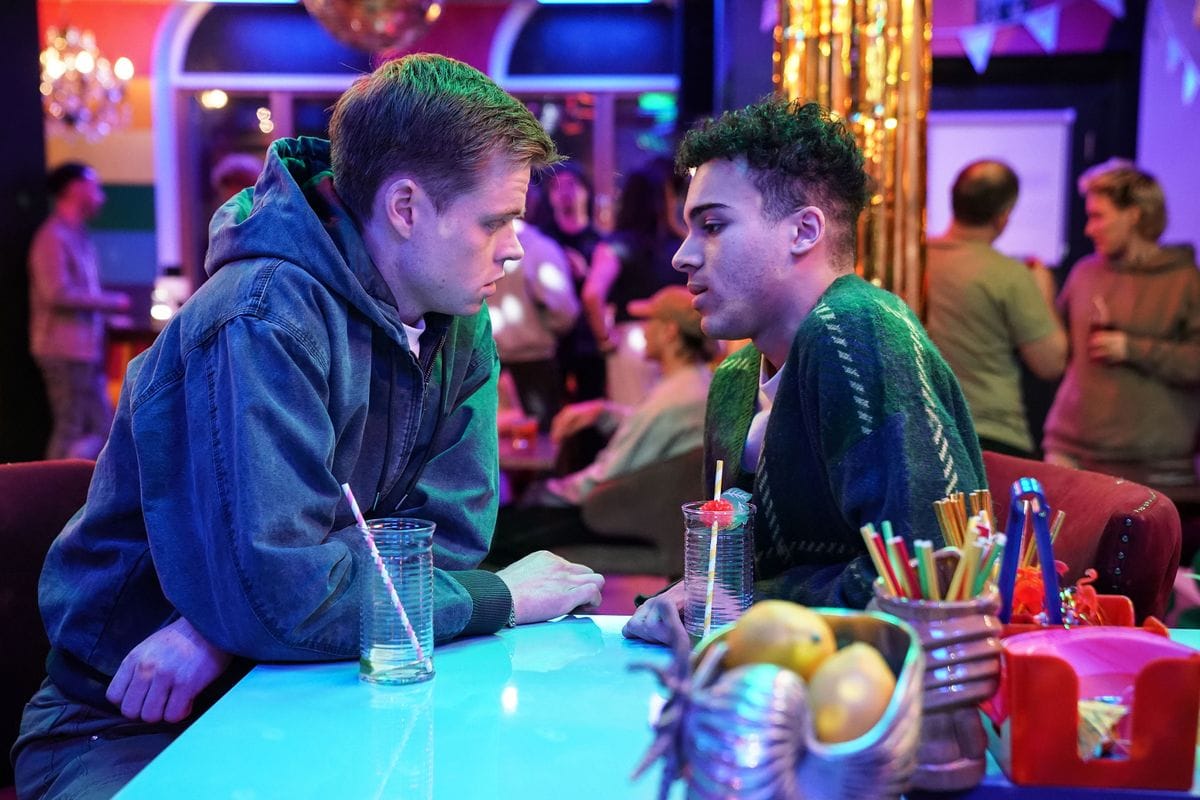
EastEnders appears to be acknowledging that reality. Rather than portraying Oscar as someone struggling to understand his sexuality, the show presents him as a young man struggling to understand his feelings.
There is an important difference. The storyline also avoids reducing Oscar to labels. He is not simply "the bisexual character". He is a fully developed person making mistakes, hurting people unintentionally and trying to work out what he wants from life.
British soaps have often led the way when it comes to LGBTQ+ representation, from groundbreaking gay storylines in previous decades to modern portrayals of same sex relationships that feel entirely natural within everyday life.
Oscar's story feels like the next step in that evolution. It is not about whether he is attracted to boys or girls. It is about who he chooses, how honest he is and what kind of person he wants to become.
For many viewers, that may be the most positive sign of progress of all.