Could Your Friendly AI Assistant Be Influencing How You Judge Security Risks?
Research involving 277 users examines how humanlike AI voices influence enjoyment and perceived security risks, alongside concerns about synthetic speech.


Artificial intelligence assistants are becoming increasingly conversational, with natural-sounding voices and responses designed to make interactions feel familiar rather than mechanical. Although these developments can make technology easier and more enjoyable to use, researchers are examining whether humanlike characteristics also influence how people assess the risks associated with digital systems.
A study involving 277 AI voice-assistant users found that humanlike qualities were associated with greater enjoyment, which was subsequently linked to lower perceptions of security risk. The findings raise questions about how emotional responses influence technological trust, particularly when users interact with assistants through voices and conversational behaviour that resemble human communication.
However, the research does not establish that friendly assistants are inherently insecure or that users become exposed to greater danger simply because they enjoy interacting with them. Instead, it identifies relationships between the way technology is presented, the experience of using it and the judgements people make about potential security concerns.
What did researchers discover about humanlike AI assistants?
The study researched anthropomorphism, a concept describing the tendency to attribute human characteristics to non-human objects or systems.
Humanlike characteristics can include natural speech, conversational responses and interactions that appear socially familiar, potentially making digital services feel more approachable than traditional computer interfaces. The researchers wanted to understand whether these qualities influenced enjoyment, perceived security risks and the intention to discontinue using an assistant.
They analysed survey responses from 277 users using structural equation modelling, a statistical approach that examines relationships between several variables within a proposed theoretical framework. This allowed them to investigate whether humanlike design was directly associated with perceptions of security or whether the relationship involved other factors.
Their findings indicated that greater anthropomorphism was associated with increased enjoyment, while enjoyment was subsequently linked to lower perceived security risk and a reduced intention to stop using the technology. Importantly, the researchers did not identify a direct relationship between anthropomorphism and lower perceived security risk, suggesting that enjoyment played a significant role in the association.
The distinction is important because it challenges the simplistic assumption that making an assistant sound more human automatically makes users consider it safer. Instead, the research suggests that enjoyable interactions may influence how people evaluate technology, even when those interactions provide no independent information about its technical protections.
The researchers also found that anthropomorphism strengthened the relationship between enjoyment and reduced perceptions of security risk, indicating that humanlike characteristics may influence how emotional experiences are connected to users' judgements. Additional analyses explored the possibility of more complex relationships, including nonlinear effects and characteristics specific to voice-based interaction.
However, the study relied on survey data rather than an experiment in which researchers deliberately altered the voices of otherwise identical assistants and measured subsequent behaviour. It therefore cannot establish that a particular vocal characteristic directly causes people to disregard security warnings or make unsafe decisions.
Nor did the researchers independently test the technical security of the systems participants were using, meaning perceived risk should not be confused with actual vulnerability. Someone might feel comfortable using an assistant with strong security protections, while another person might express concern about a system that has effective safeguards.
The study's value lies in demonstrating why psychological responses deserve consideration alongside technical performance, particularly as companies develop AI systems designed to communicate in increasingly natural ways.
Could humanlike voices create new security challenges?
Voice assistants are already integrated into everyday activities, including setting reminders, searching for information, controlling connected devices and accessing entertainment. Their convenience often depends on making interactions straightforward, particularly when users are occupied with other tasks or find conventional interfaces difficult to navigate.
Natural speech can improve accessibility and make digital services easier to use, so the development of humanlike assistants should not automatically be treated as undesirable. The challenge is ensuring that enjoyable interactions do not replace clear information about privacy settings, authentication and how personal data is processed.
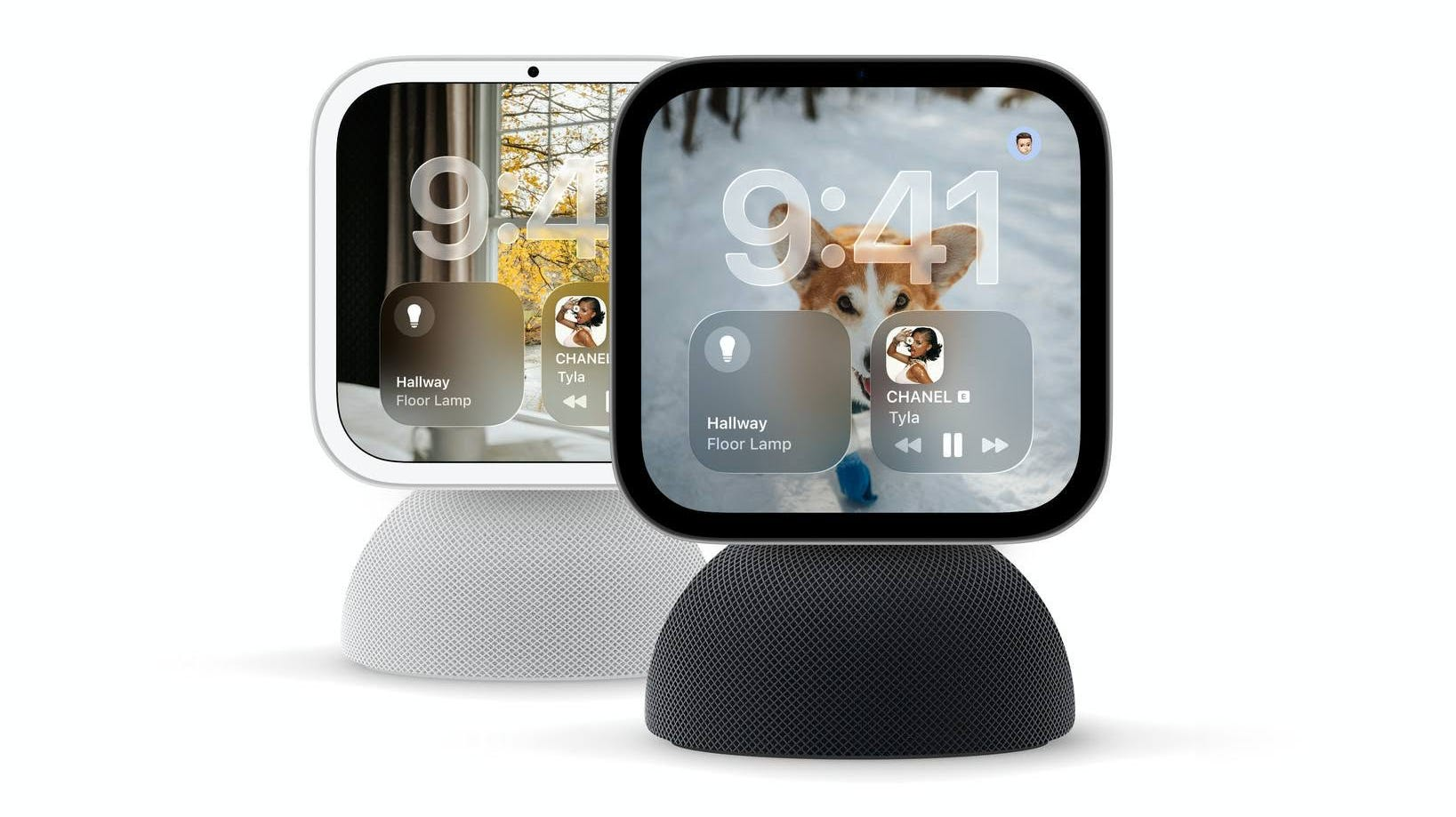
A separate study published in the Journal of Information Security and Applications in September 2026 examined the security and privacy of smart personal assistants when interacting with real and synthetic voices. The researchers considered devices including Apple HomePod, Amazon Alexa and Google Home, investigating how voice-based systems responded to different forms of speech and whether artificial voices could imitate registered users.
The study also explored methods for distinguishing authentic speech from synthetic recordings, an increasingly important problem as voice-generation technology becomes more convincing. In preliminary listening tests, human participants performed only marginally better than the 50% chance baseline when attempting to distinguish real voices from synthetic alternatives.
That finding illustrates the difficulty of relying on human listening alone to identify artificial speech, although the result should not be interpreted as proof that every commercial voice assistant can be compromised through impersonation. The research examined particular systems and testing conditions, making its conclusions more specific than a general claim about the security of all voice-controlled devices.
The two studies investigate different questions, but together they demonstrate why conversational AI should be assessed from both psychological and technical perspectives. One examines how people perceive risks during enjoyable interactions, while the other explores security challenges associated with synthetic voices and voice-based authentication.
This distinction becomes increasingly important when considering the future of AI assistants because humanlike interaction and technical security do not necessarily develop at the same rate. A system may become more convincing conversationally without corresponding improvements in authentication, while strong security protections may remain difficult for users to understand.
For developers, the challenge involves designing assistants that are approachable while ensuring that privacy and security information remains accessible. Users should be able to understand whether recordings are retained, how account information is handled and which controls govern data collection without needing specialist technical knowledge.
The research also raises broader questions about how people develop familiarity with digital systems. As assistants become capable of longer conversations, personalised responses and more natural communication, users may increasingly experience them as familiar presences rather than conventional software.
Such familiarity can make technology more convenient and engaging, but it may also influence expectations about what a system understands or how reliably it protects information. The 277-user study does not predict the consequences of these future developments, although it provides a useful foundation for investigating the relationship between emotional engagement and perceptions of risk.
There is a wider lesson for consumers because the experience of using technology should be distinguished from evidence about how that technology operates. A natural voice may make an assistant pleasant to interact with, but it does not establish whether personal information is securely stored or whether a particular authentication method can resist impersonation.
Equally, the existence of technical security risks does not mean that voice assistants should be avoided altogether, particularly when they provide meaningful accessibility and convenience benefits. Understanding their capabilities, reviewing available privacy controls and remaining aware of how personal information is processed are more proportionate responses than assuming every humanlike interaction is dangerous.
The research ultimately suggests that designing responsible conversational AI involves more than producing an appealing personality. As assistants become increasingly sophisticated, developers will need to consider whether users can accurately assess the technology's capabilities and limitations while still benefiting from natural, accessible interaction.
Research and sources: AI voice-assistant study (2026) | Voice security research (2026)